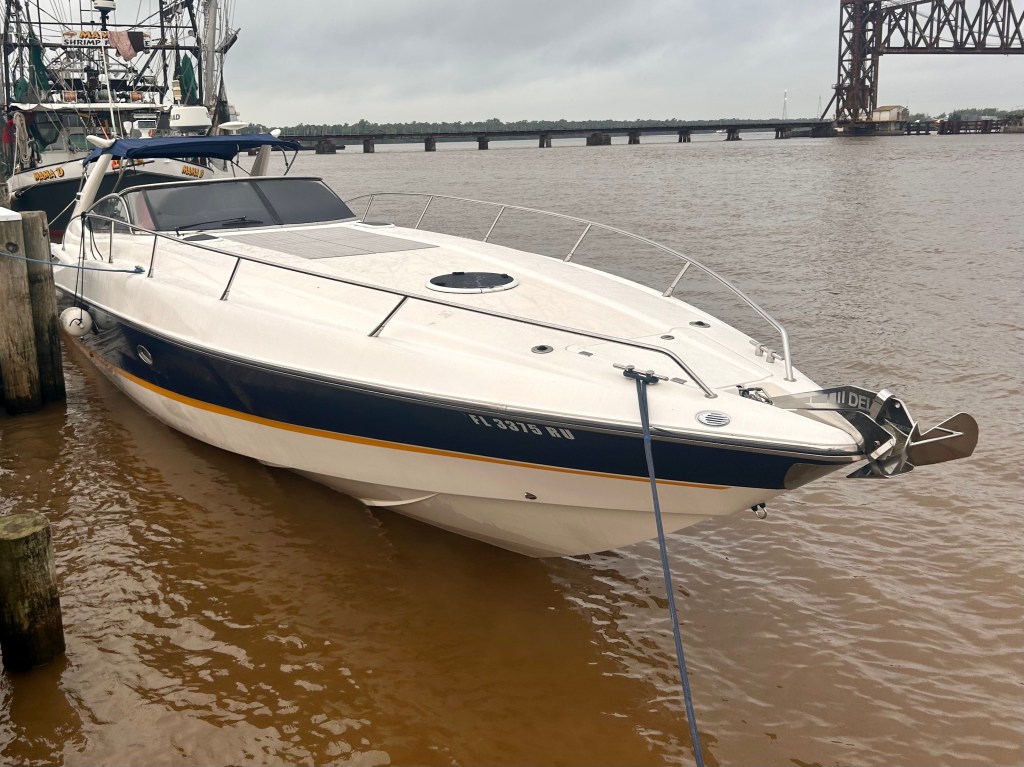
Ft. Myers, FL to Galveston, TX
The Sunseeker Superhawk 48 is a high-performance, deep-V express cruiser designed to cover distance quickly in open water while maintaining a stable, confident ride in short Gulf chop—attributes that helped considerably during this delivery. At the same time, its delivery profile on the Intracoastal is shaped by the realities of a fast, relatively narrow hull. The trips progress was limited by speed-restricted zones, bridge approaches, and wake-sensitive areas, and we had to look at it as a marathon rather than a sprint. The boat’s performance capability provides operational margin for weather avoidance and schedule recovery when conditions allow, but planning has to account for higher fuel burn at max speed. We also had to take into account narrow channels and lots of commercial traffic.
The Fort Myers–to–Galveston delivery was completed over seven daylight-only running days. The trip used the west-coast Intracoastal where we could and also an offshore Gulf leg to bridge the Florida Big Bend gap. Then continuing west through the Panhandle, Alabama/Mississippi, Louisiana, and into the Galveston Bay. Pre-trip planning focused on reducing operational uncertainty: confirming vessel readiness (engines, steering, fuel system, bilge, electrical, nav electronics), establishing a conservative cruising profile despite the Hawk 38’s 54 mph capability to account for speed-restricted zones and wake management, building a day-by-day route plan with realistic stop options and “no-late-arrival” cutoffs, identifying bridge schedules and known chokepoints, and selecting alternates for weather or mechanical contingencies. Particular attention was placed on the offshore weather window for the Gulf crossing (sea state, wind direction, visibility), fuel range and reliable fueling locations, current charting and notices affecting depths/closures, communications expectations in commercial corridors, and the specific complexities of the Galveston Bay entrance and ship-channel environment so arrival could be handled deliberately with adequate daylight margin.
We departed Fort Myers at first light on Day 1. Although the boat is capable of 54 mph, the delivery profile was dictated by speed-restricted zones, bridge/traffic constraints, and the decision to run exclusively during daylight. The operating priorities were consistent throughout: maintain predictable boat handling, remain within marked water where depths were reliable, avoid schedule-driven risk, and secure the vessel with sufficient daylight remaining each day.
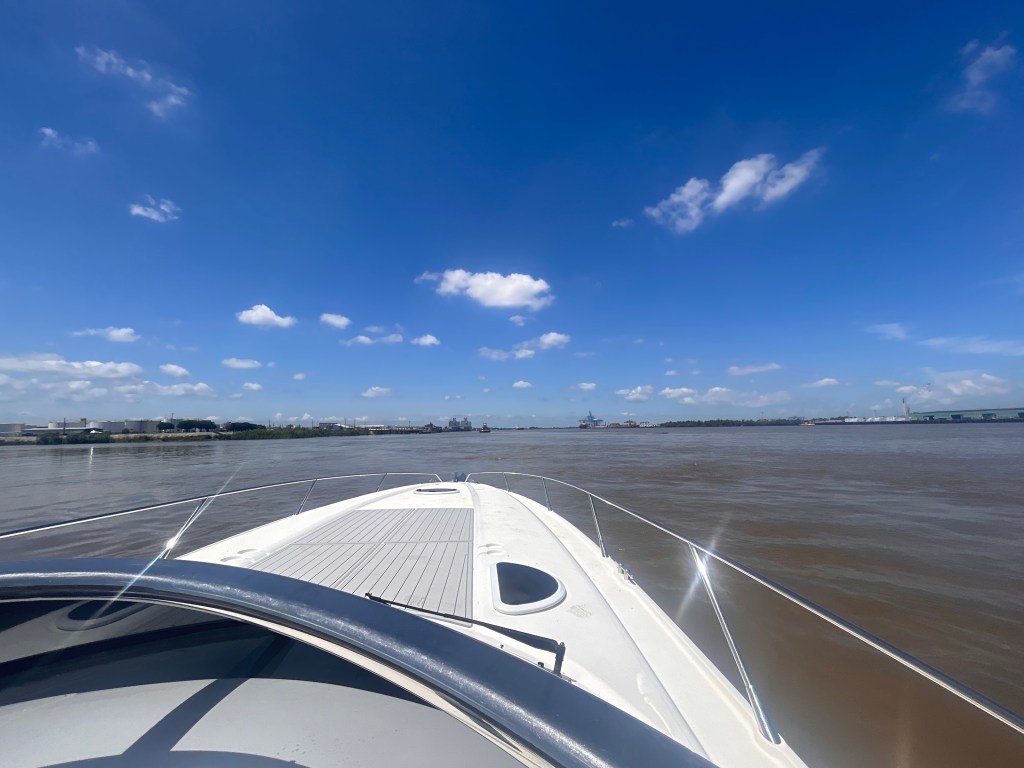
Day 1 — Fort Myers to the west-coast Intracoastal
The first day established the pattern of inside running: frequent course changes, continuous attention to aids to navigation, and repeated transitions between short open stretches and regulated slow zones. Progress was less a function of available speed and more a function of compliance with restrictions and careful management of narrow and shallow margins near the channel edges. The day ended with an early tie-up to preserve margin for docking and end-of-day checks
Day 2 — Bridge timing and the Tampa Bay transition
Day 2 was defined by bridge scheduling, localized congestion, and the need to control the pace to reduce stop-and-go operation. The Hawk’s speed was useful only between constraints; efficiency came from arriving at bridge approaches on favorable timing and minimizing idle time. Tampa Bay marked a shift toward larger, more open water and more commercial influence, requiring early traffic identification, conservative passing decisions, and predictable maneuvers.
Day 3 — Positioning for the Big Bend gap
Day 3 focused on positioning for the non-contiguous segment of the west-coast route around Florida’s Big Bend. Because the Intracoastal is not continuous in that area, the trip required an offshore Gulf leg and therefore a favorable weather window. The day was run with an emphasis on readiness: monitoring forecast trends, avoiding late arrivals, and staging for a departure at first safe light to complete the offshore segment within daylight.
Day 4 — Gulf offshore leg (Big Bend) and return to inside waters
Day 4 began at first light with departure timed to the weather window and daylight limitations. Offshore, the navigation workload shifted from high-frequency ICW piloting to longer-range management of sea state, visibility, traffic awareness, and fuel/time pacing to ensure daylight arrival. Speed was kept conservative despite capability, with the objective of a stable, controlled run rather than maximum pace. Re-entering protected waters restored the inside-water operating rhythm and allowed a controlled end-of-day arrival.
Day 5 — Panhandle progression: bays, passes, and variable exposure
Day 5 combined sheltered segments with open bays and exposed reaches where wind-driven conditions can change quickly. Operation centered on maintaining control through passes and transitions, adjusting speed to conditions, and avoiding late-day commitments that would compress docking under diminishing light. Traffic density increased near population centers, requiring additional wake management and conservative spacing.
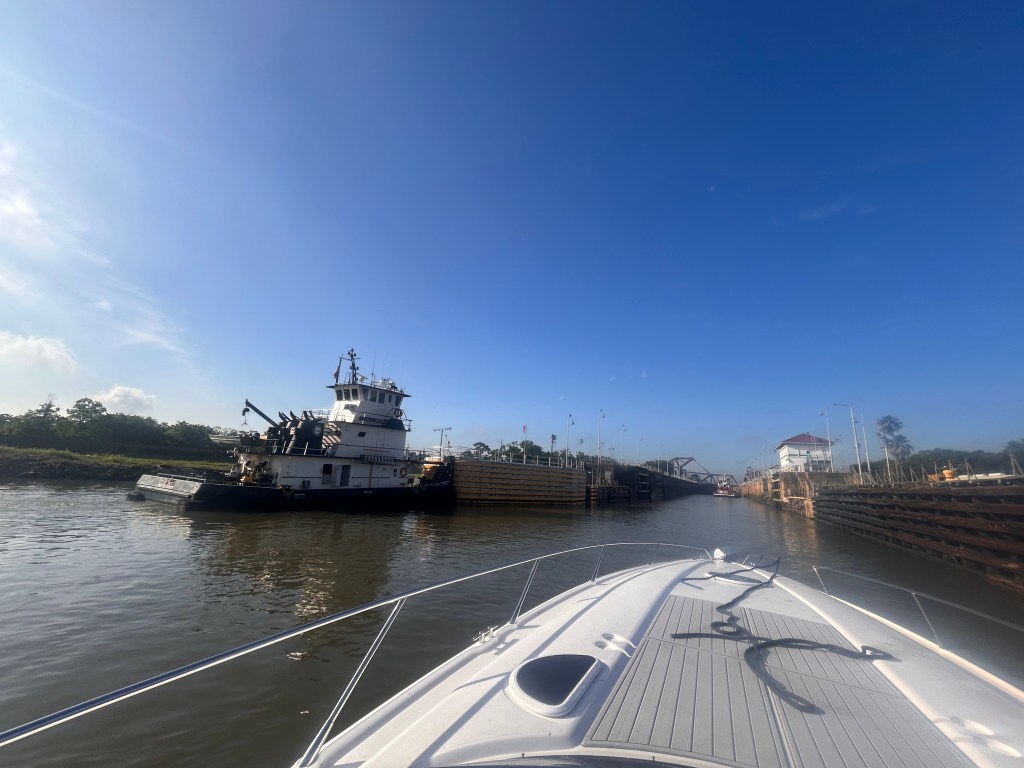
Day 6 — Mobile area and Mississippi Sound: working-waterway conditions
Day 6 required a working-corridor mindset: early identification of tugs and tows, proactive speed reductions, and clear, predictable positioning in narrower reaches. Mississippi Sound presented a mixed profile—nominally protected but capable of short, uncomfortable sea states under wind. The day ended positioned for the final push, with attention shifting toward increased industrial traffic and infrastructure constraints farther west.
Day 7 — Louisiana/Texas transit and Galveston Bay arrival
The final day was planned and executed to preserve daylight margin while accounting for corridor pinch points and commercial traffic. Westbound segments became increasingly industrial, with frequent wake interaction and limited room to deviate from the marked route. The approach to Galveston was treated as an operational transition rather than an endpoint.
Entering via Bolivar Roads required strict channel discipline. Currents at the entrance were significant and produced lateral set if uncorrected. The entrance environment combined deep-draft movements, crossing traffic, and constrained safe water, requiring early speed reduction and a high emphasis on situational awareness. Maneuvering was kept deliberate and readable; the Hawk’s speed advantage was not used for late adjustments or aggressive crossings.
Inside Galveston Bay, the workload remained high. The bay opens geographically but remains shallow relative to its fetch, and conditions can degrade quickly with wind. Traffic patterns and channel geometry required continuous monitoring, conservative passing and crossing decisions, and consistent wake control near working vessels and industrial shorelines. Final approach and docking were executed with remaining daylight to allow controlled handling, secure mooring, and completion checks without time pressure.
 Mike Moves Boats
Leave a comment