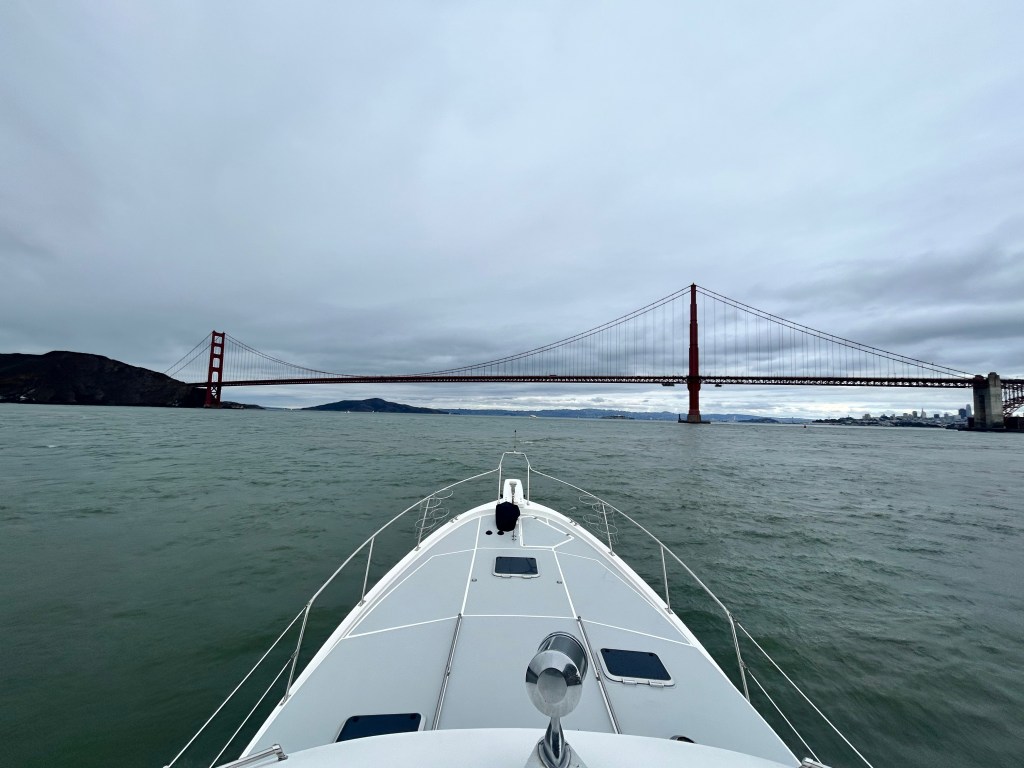
The delivery vessel was a 38-foot Bayliner cruiser configured for coastal passage-making: moderate draft, practical deck hardware, and systems sized for sustained operation rather than short harbor runs. In this size range, the boat rewards disciplined seamanship—keeping weight balanced, managing speed for comfort and economy, and maintaining a consistent routine for machinery checks and navigation. For an up-the-coast reposition from San Diego to Alameda, the platform is well-suited provided the plan respects daylight limits, fuel range, and the Pacific’s tendency to turn a routine leg into a weather-driven decision.
Pre-Trip Planning
We planned the trip around one primary constraint and two primary risks.
Constraint: daylight-only operations.
Each day was designed as a realistic run that allowed time for pre-departure checks, fuel and dock turns, and arrival before last light—without relying on “perfect conditions” to make the schedule work.
Risk 1: exposure along the Southern and Central California coast.
Many legs require open-water routing with limited bail-out options between harbors. We identified “commitment points” on each day—places where conditions had to be acceptable to proceed.
Risk 2: bar/entrance conditions and swell-driven closures.
Several harbors on this route can become unsafe or restricted with long-period swell and breaking surf. We flagged Morro Bay as a known sensitivity, with clear alternates identified (and a strong bias toward waiting rather than forcing an entrance).
Planning actions included:
- daily NOAA forecast review and buoy checks (swell height/period and wind waves),
- fuel-stop selection with conservative reserve margins,
- route cards for each leg (waypoints, headings, hazards, approach notes),
- clear crew roles for docking, lookout, navigation, and engine-room checks,
- and a standing rule: no “schedule pressure” decisions late in the day or at a marginal inlet.
Day-by-Day Trip Log (7 Days, Daylight Only)
Day 1 — San Diego to Dana Point / Newport Area: Establishing the Rhythm
We departed San Diego after baseline checks: fluids, bilge status, strainers, electronics, and a brief run-up to confirm temperatures and pressures were stable. Once clear of local traffic, we set a conservative cruise that balanced comfort and fuel economy.
The primary focus was procedural: tightening communications, confirming radar/AIS settings, validating the plotter route, and establishing a regular interval for engine-room checks. We arrived with ample daylight, secured the boat, and used the remaining time to top off consumables and review the next day’s offshore conditions.
Day 2 — Dana Point / Newport to Santa Barbara / Ventura Area: Longer Mileage, Higher Exposure
This was a mileage day. The plan was straightforward: depart early, make steady progress, and arrive early enough to avoid end-of-day fatigue during docking. Coastal traffic increased at times, and we treated it as a pace setter—maintaining safe passing distances and avoiding unnecessary speed changes.
Approaching the Santa Barbara/Ventura area, we shifted from “open-water routine” to “arrival discipline”: fenders and lines staged early, approach briefed, and the docking plan agreed upon before we entered the harbor environment.
Day 3 — Santa Barbara / Ventura to Morro Bay: Timing the Coast and Setting Up for the Central Section
We left with the expectation that conditions would deteriorate within the next 24–48 hours based on the developing Pacific system. The objective was to reach Morro Bay with enough margin to enter safely well before any swell spike made the bar questionable.
The run north was steady, but the forecasting trend was not encouraging—swell building and periods lengthening. We made Morro Bay and transitioned immediately into “entrance assessment mode”: checking observations, monitoring conditions, and coordinating locally. We secured the boat and prepared for what the forecasts were pointing toward: a forced pause.
Day 4 — Morro Bay Weather Hold (Storm Day 1): Harbor Entrance Closed by High Surf
The storm arrived as expected, bringing high surf that made the harbor entrance unsafe and effectively closed. We did not attempt to “test it” or wait for a last-minute opening—this was a clear case where patience is the correct operational decision.
With the boat secured, the day was used productively:
- double-checked lines and chafe protection,
- verified bilge alarms and shore power load management,
- topped off fuel and water where possible,
- and reviewed routing for the next legs so that once the window opened we could depart efficiently without rushing.
Day 5 — Morro Bay Weather Hold (Storm Day 2): Monitoring the Bar and Managing Readiness
Conditions remained restrictive. Even when wind moderates, long-period swell can keep an entrance dangerous well after the “storm” is nominally over. We continued to monitor official guidance and local observations and maintained a ready posture without forcing a departure.
This second hold day is often where crews make poor decisions due to impatience. We treated it as part of the plan—not a setback—and preserved the safety margin we built into the schedule.
Day 6 — Morro Bay to Monterey: Taking the Window
Once the swell subsided enough for a safe transit and the entrance reopened, we moved decisively. Departures after weather holds benefit from structure: pre-departure checks done methodically, route loaded and verified, and a conservative speed profile until everything is revalidated under way.
The run north was the reward for waiting—manageable conditions, predictable handling, and efficient progress. We arrived Monterey with adequate daylight, secured the boat, and confirmed the final day plan into the Bay with attention to timing and traffic.
Day 7 — Monterey to Alameda: Final Push and Bay Transit Discipline
The final day combined open-water running with a transition into one of the most operationally busy environments of the trip. Approaching San Francisco, the emphasis shifted from sea state to traffic management, situational awareness, and timing.
We planned the Bay entry and transit for a controlled arrival: clear communications, conservative speed in congestion, and an early staging of lines and fenders. Once alongside in Alameda, we completed the shutdown sequence, documented fuel and engine hours, and did a final walk-through to confirm the boat was delivered in stable, clean condition.
Brief Recap
The San Diego-to-Alameda delivery was completed over seven days of daylight operations, with the schedule shaped decisively by a Pacific storm that produced high surf and closed Morro Bay’s entrance for two full days. The trip succeeded because the planning prioritized weather windows and entrance risk over calendar pressure. The two-day hold was not lost time; it was a deliberate safety decision that preserved crew readiness and avoided the highest-risk scenario on the route—forcing a marginal bar transit. When the window opened, we executed efficiently and finished the final approach into Alameda with a controlled, professional arrival.
 Mike Moves Boats
Leave a comment